

The True Strength Index (TSI), developed by William Blau, is a momentum‑based indicator designed to capture both the direction and intensity of price trends. Unlike traditional oscillators such as RSI or Stochastic, the TSI applies a double smoothing process to price changes, which reduces short‑term noise and provides a clearer view of underlying momentum. This makes it a reliable tool for identifying overbought/oversold conditions, spotting divergences, and confirming reversals with greater precision.
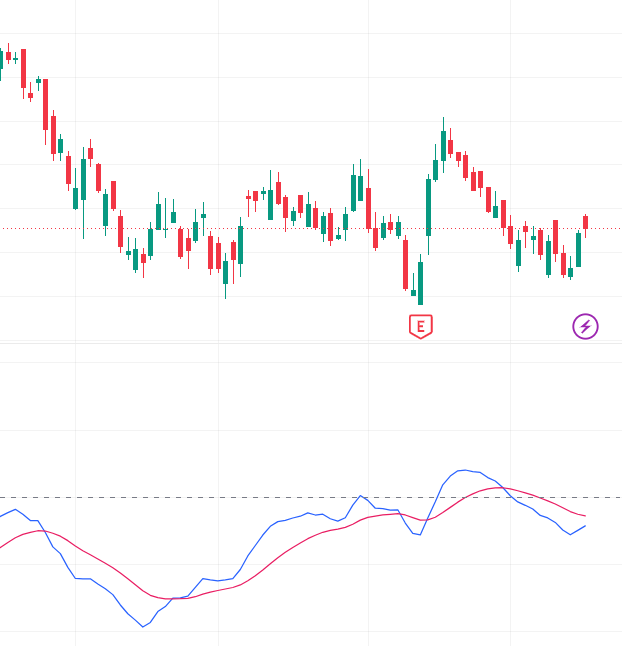
Structural Components
The TSI calculation involves several steps:
- Price Change: Compute the difference between the current and previous closing prices.
- Double Smoothing: Apply two exponential moving averages (EMAs) to both the price change and its absolute value.
- Ratio Calculation: Divide the smoothed price change by the smoothed absolute price change.
- Signal Line: A moving average of the TSI line is often added to generate crossover signals.
The final output oscillates between +100 and ‑100, with zero serving as the midpoint reference.
Distinctive Attributes
- Double Smoothing: Filters out short‑term fluctuations for cleaner signals.
- Bounded Oscillator: Values remain within +100 and ‑100.
- Zero Line Reference: Readings above zero indicate bullish momentum, while values below zero suggest bearish sentiment.
- Crossover Utility: TSI crossing its signal line generates actionable buy/sell triggers.
- Divergence Alerts: Differences between price action and TSI highlight potential reversals.
Market Psychology Reflected
- Above Zero: Buyers dominate, showing strength in upward momentum.
- Below Zero: Sellers are in control, reflecting bearish pressure.
- Crossover Events: Shifts in sentiment occur when TSI crosses its signal line.
- Divergence: When price rises but TSI falls, it signals weakening momentum and possible reversal.
This dynamic captures the balance between bullish enthusiasm and bearish caution, offering traders insight into crowd behavior.
Analytical Considerations
- TSI is trend‑sensitive, making it effective in directional markets but requiring confirmation in sideways conditions.
- It is often paired with moving averages, MACD, Bollinger Bands, or volume indicators to strengthen reliability.
- Its double smoothing design reduces false signals compared to oscillators that rely on raw price changes.
- Particularly useful for swing traders and systematic strategies, where clarity and responsiveness are critical.
Contextual Importance
- Trend Confirmation: Validates whether momentum supports bullish or bearish sentiment.
- Entry & Exit Guidance: Signal line crossovers provide disciplined timing.
- Risk Awareness: Filters out false signals by smoothing price changes.
- Reversal Alerts: Divergences highlight weakening momentum before price shifts occur.
Final Insight
The True Strength Index is a robust momentum oscillator that combines double smoothing with ratio analysis to deliver reliable trading signals. Its ability to filter noise while highlighting trend strength makes it valuable for both short‑term and long‑term traders. By identifying overbought/oversold conditions, confirming momentum, and spotting divergences, TSI provides a structured framework for disciplined market analysis. When paired with trend‑following or volatility‑based indicators, it enhances accuracy and confidence, offering traders a dependable tool to navigate bullish and bearish conditions effectively.
