

The Relative Volatility Index (RVI) is a technical analysis oscillator designed to measure the direction of volatility rather than pure price momentum. Developed as a variation of the Relative Strength Index (RSI), it replaces price change calculations with volatility measures, focusing on standard deviation shifts. This makes RVI particularly useful for identifying whether volatility is favoring bullish or bearish conditions, often providing early warnings of breakouts or reversals.
Interpolation enhancements further refine the indicator by smoothing erratic spikes, creating more stable and dependable readings.
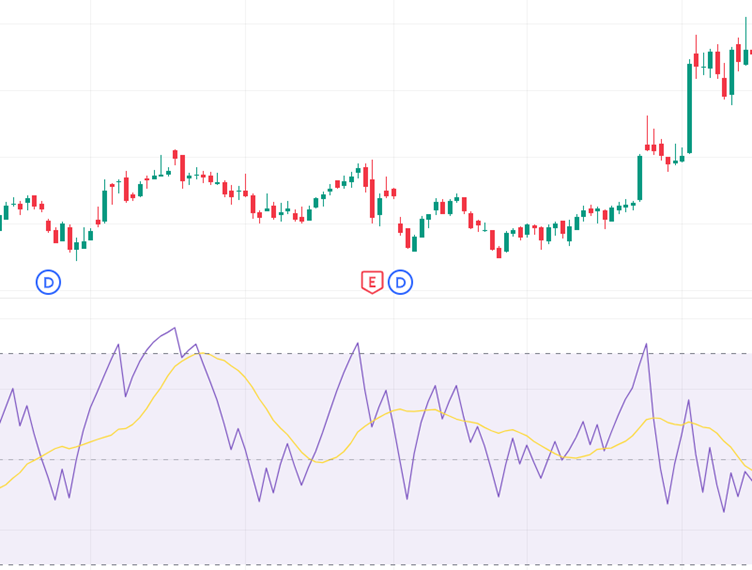
Structural Components
The RVI formula evaluates volatility trends:
RVI = 100 *{Upward Volatility}/{Total Volatility}
- Upward Volatility: Standard deviation of upward price moves.
- Total Volatility: Combined standard deviation of both upward and downward moves.
- Oscillation Range: Values fluctuate between 0 and 100.
- Above 50: Bullish volatility dominance.
- Below 50: Bearish volatility dominance.
- Interpolation Smoothing: Reduces sudden spikes caused by short‑term volatility bursts.
Distinctive Attributes
- Volatility Trend Analysis: Focuses on volatility direction rather than price alone.
- Early Breakout Detection: Rising volatility often precedes strong directional moves.
- Signal Stability: Interpolation reduces false reversals.
- Trend Confirmation: Bullish volatility supports upward momentum; bearish volatility supports declines.
- Oscillator Framework: Easy interpretation using threshold levels.
- Cross‑Market Utility: Applicable in equities, forex, futures, and cryptocurrencies.
Market Psychology Reflected
- RVI Above 50: Indicates confidence among buyers, suggesting volatility supports bullish sentiment.
- RVI Below 50: Reflects dominance of sellers, highlighting bearish conviction.
- Sudden Spikes: Capture crowd anxiety during volatile phases.
- Stable Readings: Suggest balanced sentiment and reduced uncertainty.
This dynamic mirrors how traders perceive volatility as either constructive (supporting trends) or destructive (creating instability).
Analytical Considerations
- RVI is volatility‑sensitive, making it effective for anticipating breakout conditions.
- It is often paired with trend‑following tools (moving averages, MACD) or momentum oscillators (RSI, Stochastic) for confirmation.
- Particularly useful for scalpers monitoring intraday volatility surges and swing traders confirming broader trend continuation.
- Customizable parameters allow adaptation to different assets and timeframes.
Contextual Importance
- Breakout Confirmation: Rising RVI alongside price expansion validates directional strength.
- Risk Awareness: Helps avoid false entries by filtering noise.
- Reversal Alerts: Detects weakening volatility before price shifts occur.
- Emotional Discipline: Provides structured analysis in volatile markets, reducing fear‑driven decisions.
Final Insight
The Relative Volatility Index is a refined oscillator that emphasizes volatility behavior over price momentum. By highlighting whether volatility supports bullish or bearish conditions, it offers traders deeper insight into market dynamics. Interpolation smoothing enhances reliability, reducing false signals and improving clarity. For traders seeking a disciplined approach to volatility analysis, RVI provides a robust framework to anticipate breakouts, confirm trends, and manage risk effectively.
