

Introduction
At first glance, margin trading looks like a shortcut to bigger profits. By borrowing funds from your broker, you can take positions far larger than your own capital. But what feels like an advantage quickly turns into a liability when markets move against you. For most investors, margin is less a tool for wealth creation and more a trap that magnifies losses, adds stress, and erodes discipline.
The Real Risks of Margin
1. Leverage Cuts Both Ways
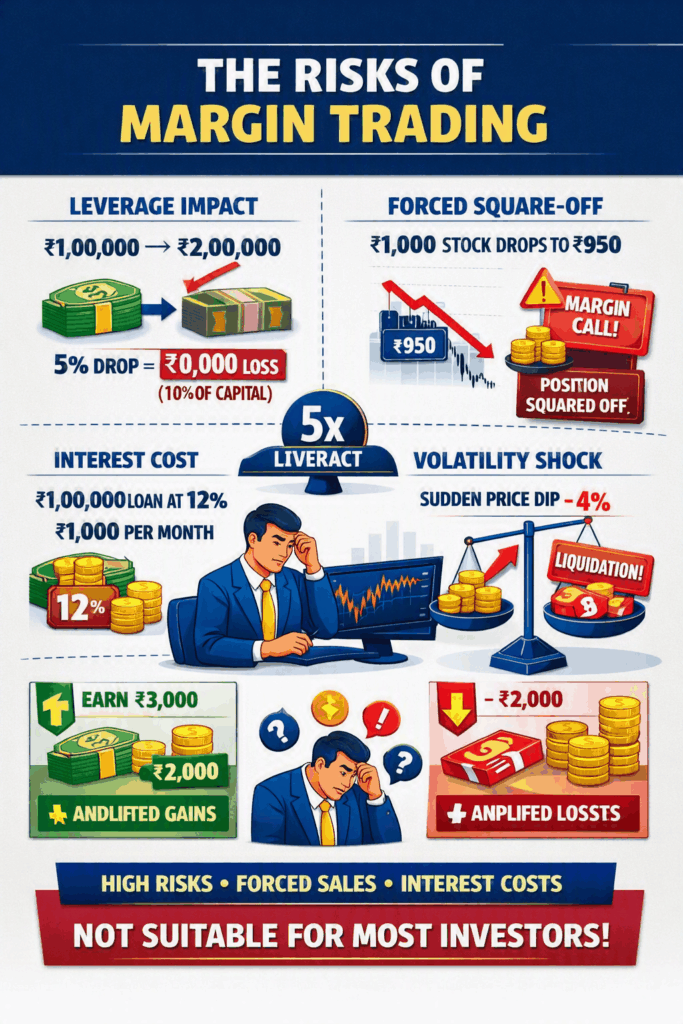
With ₹1,00,000 in capital, a margin position of ₹2,00,000 doubles your exposure. A mere 5% decline in stock price translates into a ₹10,000 hit — wiping out 10% of your actual funds. Gains may be amplified, but losses are multiplied even faster.
2. Margin Calls and Forced Liquidation
Even healthy companies experience short‑term dips. If your stock slips from ₹1,000 to ₹950, your broker may trigger a margin call and close your position automatically. You’re forced out at a loss, with no chance to wait for recovery.
3. Interest Eats Into Returns
Borrowed money isn’t free. At 12% annual interest, a ₹1,00,000 margin loan costs about ₹1,000 per month. A trade that earns ₹3,000 shrinks to ₹2,000 after interest. And if the trade fails, the interest only deepens the red ink.
4. Volatility Turns Deadly
Markets swing daily on news, sentiment, or global cues. A 3–4% intraday dip is routine. But with margin, that small move can wipe out a large portion of your capital and trigger liquidation. Without leverage, it’s just noise you can ride out.
Collateral Damage Across Your Portfolio
Losses in one leveraged position can spill over. Brokers often liquidate other holdings — even profitable ones — to restore margin requirements. One bad trade can drag down your entire portfolio.
Who Can Handle Margin?
Margin isn’t always reckless. Professional traders with strict stop‑losses, hedgers managing risk, or those with real‑time monitoring sometimes use it strategically. The danger lies in retail investors applying margin to long‑term bets mismatching a short‑term tool with a long‑term horizon.
Margin Checklist: Ask Yourself Before Borrowing
- Can you meet a margin call within hours?
- Is this truly a short‑term, high‑conviction trade?
- Have you factored in interest costs to breakeven?
- Would this position cause sleepless nights?
If any answer raises doubt, margin is likely unsuitable.
Conclusion
Margin trading transforms ordinary investing into high‑stakes speculation. Broker‑driven square‑offs, relentless interest charges, and amplified volatility make it a poor fit for most investors. Instead of building wealth patiently, margin often breeds panic and impulsive decisions. Long‑term success comes from discipline, diversification, and compounding — not borrowed bets.
