Sector Analysis
Posted On: March 2, 2026
Indian Textile Sector Analysis | Feb 2026
Industry Overview
India’s textile sector is one of the largest employment generators, contributing ~2.3% of GDP and ~12% of total exports in FY25 (Economic Survey 2025–26). It spans cotton, jute, silk, wool, man-made fibers (MMF), and technical textiles. According to the Ministry of Textiles (2025), India is the second-largest producer of textiles and garments globally.
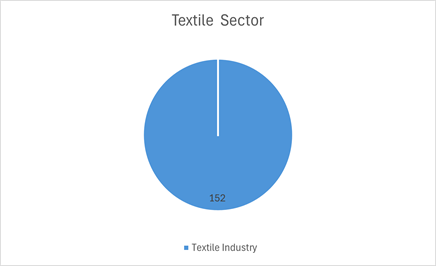
The textile sector comprises 152 companies, all classified under a single industry known as Textiles.
Market Size and Growth Metrics
- Contribution to GDP (FY25): ~2.3%
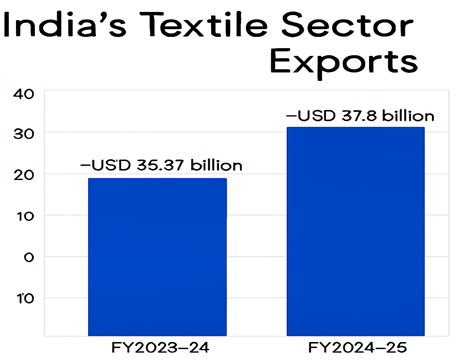
- Exports (FY25): USD 37.8 billion (Ministry of Textiles).
- Employment: ~45 million directly employed (MoT/NDAP).
- Forecast: Textile sector projected to reach USD 350 billion by 2030, with technical textiles and MMF driving growth.
India–US Tariff Developments
- In February 2026, India and the US reached a bilateral trade framework that reduced tariffs on several textile and apparel categories.
- Zero duty was announced for over half of India’s textile exports to the US, including extra-long staple (ELS) cotton products, which is expected to boost competitiveness.
- The US textile market, valued at USD 118 billion, is now more accessible to Indian exporters under this agreement.
- The Ministry of Textiles highlighted that tariff relief will strengthen MSMEs, industrial clusters, and export competitiveness.
Market Dynamics and Drivers
- Growth Drivers: Rising global demand, tariff relief in US markets, government incentives (PLI scheme), mega textile parks, and digital retail.
- Supply Chain: Cotton farmers, spinning mills, weaving units, garment manufacturers, exporters.
- Technological Trends: Technical textiles, smart fabrics, sustainable fibers, digital supply chain management.
- Consumer Trends: Preference for eco-friendly fabrics, branded apparel, and fast fashion.
Competitive Landscape
- Major Players: Arvind Mills, Vardhman Textiles, Raymond, Welspun, Reliance Industries (polyester/MMF).
- Public Sector: Cotton Corporation of India, Jute Corporation of India.
- Supplier Power: Moderate; cotton and MMF prices affect competitiveness.
- Buyer Power: High, with global buyers demanding quality and sustainability.
- Threat of Substitutes: Synthetic fibers and global imports.
Regulatory Measures
- PLI Scheme (2025): Incentives for MMF and technical textiles.
- National Technical Textiles Mission (NTTM): Promotes innovation and R&D.
- Union Budget 2026–27: Allocation for mega textile parks, MSME support, and skilling initiatives.
- India–US Trade Framework (2026): Tariff relief and market access for Indian textiles.
Macro Environmental Analysis
- Strong export demand from US, EU, and Middle East.
- Budget 2026–27 focused on scale, sustainability, and competitiveness.
- Cotton price volatility impacting margins.Sustainability and ESG compliance becoming mandatory for global buyers.
- Digital retail platforms expanding domestic consumption.
SWOT Analysis
Strengths
- Large workforce and raw material base.
- Strong global presence in cotton and garments.
- Tariff relief in US markets boosting exports.
Weaknesses
- Dependence on cotton, vulnerable to climate risks.
- Fragmented supply chain with MSMEs.
- Low penetration of technical textiles.
Opportunities
- Technical textiles and MMF growth.
- Eco-friendly and sustainable fabrics.
- Export diversification to new markets.
- Digital retail and e-commerce expansion.
Threats
- Global competition from China, Bangladesh, Vietnam.
- Cotton price volatility.
- Compliance costs for ESG standards.
- Slow adoption of advanced technologies.
Future Outlook
- Textile sector projected to reach USD 250 billion by 2030.
- Technical textiles expected to grow at 12–15% CAGR.
- Tariff relief in US markets to accelerate export growth.Mega textile parks to boost scale and competitiveness.
- Focus on sustainability, innovation, and global value chain integration.
Conclusion
India’s textile sector is a pillar of industrial growth and employment, contributing significantly to GDP and exports. With strong government support through PLI, NTTM, mega textile parks, and tariff relief in US markets, the sector is poised for sustained expansion. Addressing challenges such as cotton price volatility, fragmented supply chains, and ESG compliance will be crucial for resilience under the Viksit Bharat 2047 vision.
Sources
- Ministry of Textiles (2025), Directorate General of Foreign Trade (DGFT)
- Economic Survey 2025–26, Open Government Data (OGD) Platform India
- National Data & Analytics Platform (NDAP)
- India–US Trade Framework announcements (Feb 2026)
What is xCalData?
xCalData is a Made in India AI powered investment research platform called RHOMB.
Using multilayered neural network, RHOMB analyses over 150+ technical ratios, 150+ candlestick chart patterns and over 40 fundamental ratios of each stock.
RHOMB forecasts the stock price movement for the next few days and determines buy, sell, hold or wait.
How accurate is xCalData?
xCalData publishes the accuracy of the past trades for each stock to enable an informed decision.
Is xCaldata an Algo trading platform?
No, xCalData is not an algotrading platform. User decides when to buy or sell including, we only provide inputs for the decision.
Download the app for further stock level insights: https://open.xcaldata.com/apps/
Checkout the trades and detailed insights in the app

Popular Posts
-
Stock of Interest . August 23, 2024
#HSCL (NSE) Stock Report | 23 Aug 2024
-
Stock of Interest . August 23, 2024
Add Zerodha trading account to xCalData
-
Stock of Interest . August 23, 2024
What is xCalData , how to use it and how accurate is it?
-
Stock of Interest . August 23, 2024
Jurik Moving Average (JMA): A Profit Trading Insight