

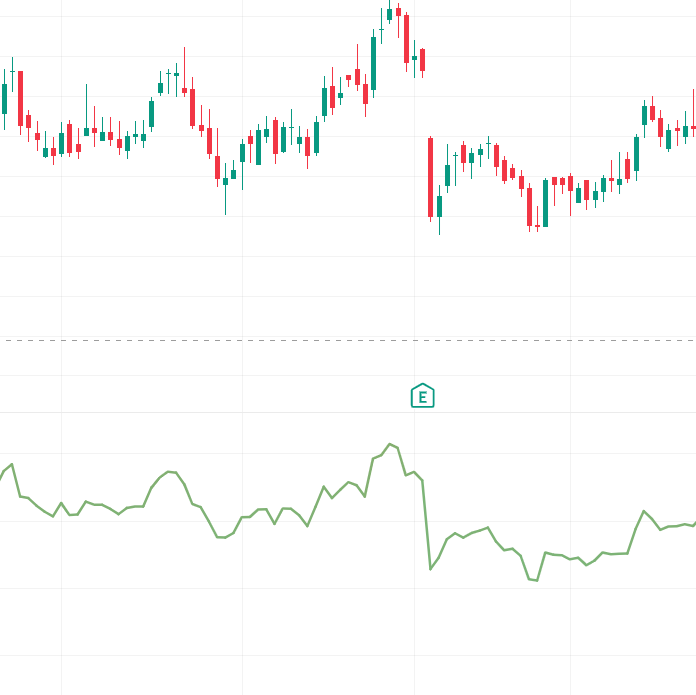
The Price–Volume Ratio (PVR) is a specialized indicator that evaluates how much price movement occurs relative to trading volume. Unlike integrated measures such as Price–Volume Oscillators (PVOL), which combine both elements into a single flow, PVR isolates efficiency by expressing the degree of price change per unit of volume. This makes it a valuable lens for detecting whether market moves are genuine or exaggerated.
Structural Components
The calculation of PVR is straightforward:
[ PVR = {%\ Price\ Change}/{Delta Volume} ]
- High PVR Values: Indicate significant price movement with relatively little volume.
- Low PVR Values: Suggest heavy volume is required to move price, reflecting strong absorption or resistance.
- Visualization: Often displayed as a line chart or histogram to highlight efficiency trends.
- Interpolation Smoothing: Applied to reduce erratic spikes and improve clarity.
Distinctive Attributes
- Efficiency Measurement: Quantifies how effectively volume translates into price movement.
- Market Behavior Insight: Highlights overreaction or underreaction relative to participation.
- Cross‑Asset Comparisons: Can be normalized to compare efficiency across different instruments.
- Anomaly Detection: Useful for spotting irregular trading activity or speculative surges.
- Noise Reduction: Interpolation improves readability in volatile conditions.
Market Psychology Reflected
- High Ratio Readings: Suggest speculative activity or thin liquidity, where small participation drives large price changes.
- Low Ratio Readings: Reflect strong institutional absorption, where large volume produces only minor price shifts.
- Stable PVR Trends: Indicate balanced sentiment and efficient price discovery.
- Sudden Spikes: Capture crowd behavior during panic buying or selling phases.
This dynamic mirrors how traders interpret conviction behind moves, distinguishing genuine demand from artificial activity.
Analytical Considerations
- PVR is sensitivity‑driven, making it effective for identifying inefficiencies in price discovery.
- It is often paired with OBV, Accumulation/Distribution, or PVOL for deeper validation.
- Particularly useful for risk managers and volume analysts, who monitor efficiency to avoid speculative traps.
- Customizable parameters allow adaptation to different markets and liquidity conditions.
Contextual Importance
- Manipulation Detection: High PVR with minimal volume may signal artificial spikes.
- Resistance Identification: Low PVR highlights strong absorption zones.
- Breakout Validation: Rising PVR alongside volume expansion confirms genuine moves.
- Decision Support: Provides structured analysis of whether price changes are efficient or distorted.
Final Insight
The Price–Volume Ratio (PVR) is a unique efficiency‑focused indicator that measures how much price movement occurs per unit of volume. By distinguishing between genuine participation and speculative exaggeration, it offers traders a refined perspective on market dynamics. Interpolation smoothing enhances clarity, making PVR a dependable tool for anomaly detection, breakout validation, and comparative analysis across assets.
