

The Bearish Modified Hikkake candlestick formation is a variation of the classic Hikkake setup that emphasizes how false optimism can quickly collapse back into bearish continuation. This multi‑candle structure begins with consolidation, tempts buyers with a breakout, and then reverses sharply, exposing long positions and reinforcing the prevailing downtrend.
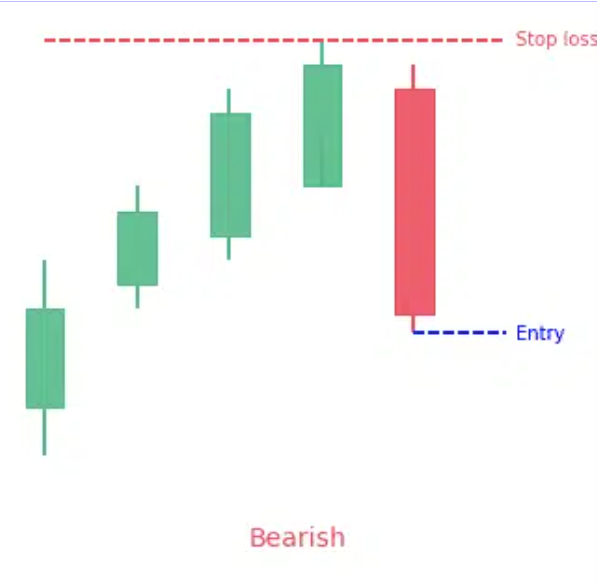
Candle Sequence in Detail
- First Candle – Inside Bar: A smaller candle forms within the range of the prior session, signaling contraction and indecision.
- Second Candle – Continued Pause: Another small candle appears, extending the consolidation phase and reinforcing uncertainty.
- Third Candle – False Breakout: A bullish candle closes above the inside bar’s range, suggesting buyers are taking control and hinting at reversal.
- Fourth Candle (and beyond) – Downward Confirmation: Price reverses lower, closing beneath the inside bar’s low, confirming that the breakout failed and the bearish trend continues.
Distinctive Attributes
- Typically emerges during an ongoing downtrend, serving as a continuation signal rather than a full reversal.
- The false breakout creates a “failed rally,” trapping buyers who expected upward momentum.
- The subsequent bearish close validates the continuation of the decline.
- Reliability increases when the reversal is accompanied by heavy trading volume, showing strong seller conviction.
Sentiment Dynamics
- Seller Dominance: The broader trend remains bearish, but consolidation introduces temporary uncertainty.
- Buyer Temptation: The breakout candle above the inside bar range entices traders to believe a reversal is underway.
- Trap Formation: The rally fails quickly, leaving buyers exposed and forcing them to exit.
- Bearish Resumption: Sellers return aggressively, driving prices lower and reasserting control over the trend.
This psychological sequence highlights how the Bearish Modified Hikkake thrives on false optimism, turning hesitation into renewed downward momentum.
Analytical Considerations
- The Bearish Modified Hikkake requires precise candle alignment, making it less common than simpler reversal or continuation patterns.
- False signals can occur if the breakout sustains instead of failing, so confirmation is essential.
- Best interpreted when paired with momentum indicators (RSI, MACD), moving averages, or volume analysis to validate the setup.
Contextual Importance
- Near Resistance Levels: The pattern is most effective when it appears close to resistance, where buying enthusiasm typically weakens.
- Volume Confirmation: Strong trading activity during the reversal adds credibility to the bearish continuation.
- Follow‑Up Candles: Subsequent bearish sessions often validate the trap, turning hesitation into sustained downward pressure.
Final Insight
The Bearish Modified Hikkake is a clever continuation pattern that exploits false rallies. By beginning with consolidation, staging a failed breakout, and then resuming the downtrend, it demonstrates how short‑term buyer enthusiasm can be swiftly overturned. Recognizing this formation allows traders to avoid traps and stay aligned with the dominant bearish momentum. Though subtle, its psychological depth makes it a valuable addition to candlestick analysis, reminding us that not every breakout is genuine — sometimes, it is the setup for a trap.
