

The Bearish Hikkake candlestick formation is a deceptive short‑term reversal setup that begins with an inside bar and unfolds into a false breakout to the upside. What makes this pattern unique is its ability to lure buyers into believing the rally will continue, only to reverse sharply downward, trapping them and rewarding sellers.
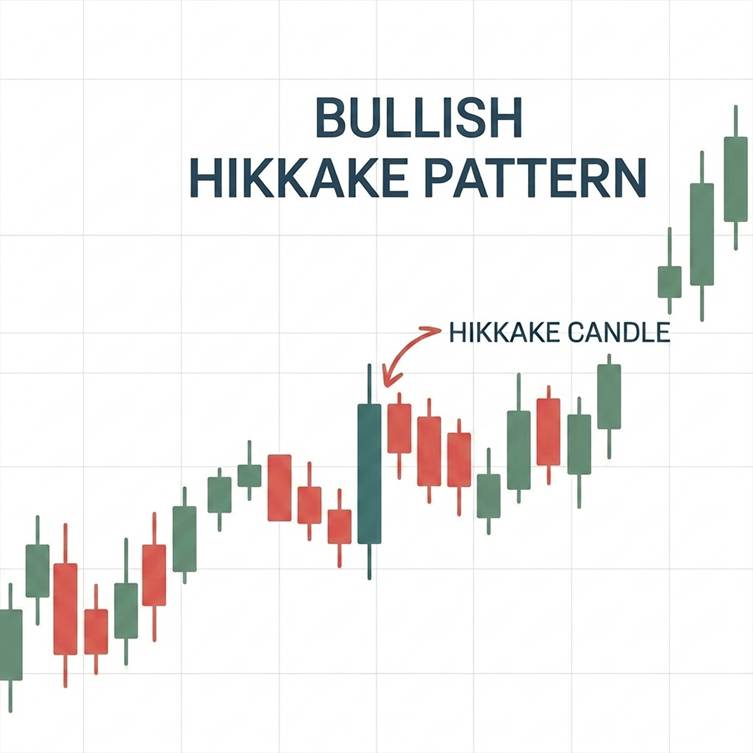
Candle Sequence Explained
- First Candle – Range Establishment: A large candle sets the boundaries of price action, creating the high‑low range.
- Second Candle – Inside Bar: A smaller candle forms completely within the range of the first, signaling contraction and indecision.
- Third Candle – False Upside Breakout: A bullish candle appears to break above the inside bar’s high, suggesting continuation, but this move fails.
- Fourth Candle (and beyond) – Downward Reversal: Price reverses lower, closing beneath the inside bar’s low, confirming the Bearish Hikkake.
Key Attributes
- Begins with an inside bar setup, a hallmark of consolidation.
- The false breakout to the upside misleads buyers into expecting continuation.
- Confirmation occurs when price closes below the inside bar’s low.
- The signal is more reliable when supported by high trading volume, showing strong seller participation.
Sentiment Dynamics
- Buyer Enthusiasm: Traders initially interpret the breakout above the inside bar as a bullish continuation, entering long positions.
- Trap Formation: The breakout fails, leaving buyers exposed as prices reverse.
- Seller Advantage: Sellers capitalize on the failed move, driving prices lower and forcing trapped buyers to exit.
This psychology highlights how the Bearish Hikkake thrives on false optimism, turning it into bearish momentum.
Analytical Considerations
- The Bearish Hikkake is a short‑term pattern, often signaling brief declines rather than long‑term downtrends.
- Without confirmation, the breakout may continue upward, invalidating the setup.
- Works best when paired with momentum indicators (RSI, MACD), moving averages, or volume analysis to validate the reversal.
Contextual Importance
- Near Resistance Zones: The pattern is most effective when it forms close to resistance, where buying enthusiasm typically weakens.
- Volume Confirmation: Heavy trading activity during the reversal strengthens the credibility of the signal.
- Follow‑Up Candles: Subsequent bearish sessions often validate the trap, turning hesitation into sustained downward pressure.
Final Insight
The Bearish Hikkake is a clever candlestick formation that exploits false optimism. By beginning with an inside bar and staging a failed breakout, it traps buyers and rewards sellers with sharp downward moves. Recognizing this setup at the top of a rally allows traders to anticipate declines and prepare for potential reversals. Though subtle, its psychological depth makes it a valuable addition to candlestick analysis, reminding us that not every breakout is genuine — sometimes, it’s the setup for a trap.
