

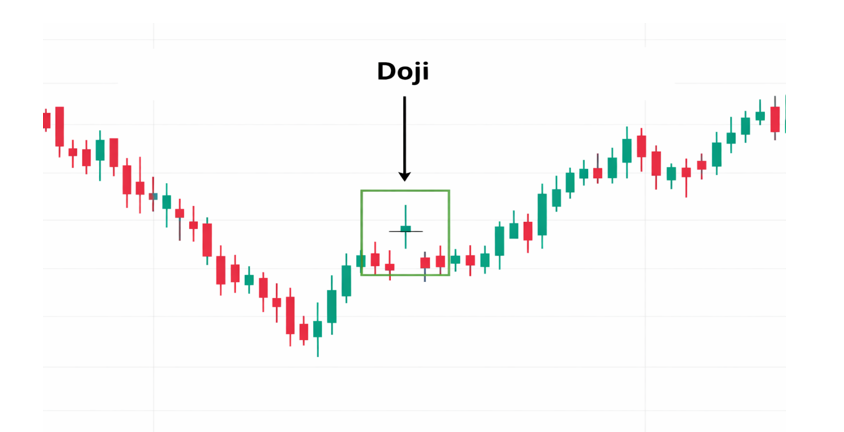
The Doji candlestick formation is one of the most recognizable patterns in technical analysis, often interpreted as a symbol of indecision. It occurs when the opening and closing prices are nearly identical, leaving behind a candle with a very small body and noticeable shadows. This structure reflects a tug‑of‑war between buyers and sellers, where neither side manages to establish dominance by the end of the trading session.
Structural Characteristics
- Body: Extremely narrow or absent, showing that the open and close are almost equal.
- Shadows: May be long or short depending on intraday price fluctuations.
- Visual Form: Often resembles a cross, plus sign, or inverted “T,” making it easy to spot on a chart.
Variations of Doji Candles
- Classic Doji: Neutral in nature, with balanced upper and lower shadows.
- Long‑Legged Doji: Displays extended wicks on both sides, highlighting extreme indecision.
- Dragonfly Doji: Characterized by a long lower shadow and no upper shadow, often hinting at a possible bullish reversal.
- Gravestone Doji: Shows a long upper shadow with no lower shadow, frequently interpreted as a bearish reversal signal.
Sentiment Dynamics
- Buyer and Seller Tug‑of‑War: Prices are pushed higher by buyers and lower by sellers, but the market closes near the opening level.
- Hesitation: This balance reflects uncertainty and often signals exhaustion after a strong directional move.
- Outcome: Depending on surrounding context, a Doji may precede either a reversal or continuation of the trend.
Analytical Considerations
- Dojis are common, which means they may lack significance in sideways or choppy markets.
- Without confirmation, they may simply reflect short‑term indecision rather than a meaningful signal.
- Best interpreted when paired with momentum indicators (RSI, MACD), support/resistance levels, or volume analysis to validate the setup.
Contextual Importance
- At Market Tops or Bottoms: Can serve as a warning of potential turning points.
- During Strong Trends: May indicate a pause or exhaustion before continuation.
- Volume Confirmation: Higher trading activity during a Doji session adds weight to its significance.
Final Insight
The Doji candlestick pattern is a versatile and powerful indicator of indecision. While not a standalone trigger, it becomes highly meaningful when combined with broader market context and confirmation signals. Recognizing its variations Dragonfly, Gravestone, and Long‑Legged allows traders to anticipate potential turning points and adjust their analysis accordingly. For technical analysts, the Doji serves as a reminder that even strong trends can pause, and that market sentiment is always subject to change.
