

Introduction
Among the many tools in technical analysis, the MACD Trend Indicator stands out as a refined extension of the classic Moving Average Convergence Divergence (MACD). While the traditional MACD is celebrated for spotting momentum shifts and potential reversals, this enhanced version places greater weight on trend direction and durability. By doing so, it helps traders and investors remain aligned with the prevailing market climate, filtering out short-term noise and emphasizing sustained momentum.
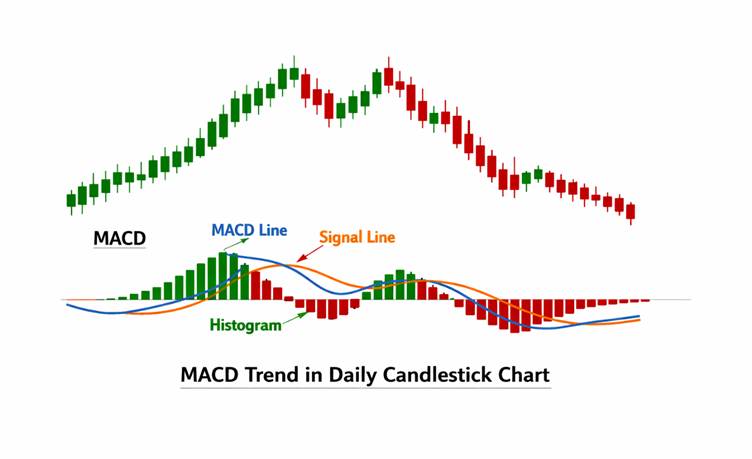
Structural Components
The MACD Trend Indicator is built upon the familiar MACD framework but introduces a stronger focus on trend persistence:
- MACD Line → Calculated as the difference between the 12‑period and 26‑period EMAs.
- Signal Line → A 9‑period EMA of the MACD line, smoothing signals for clarity.
- Histogram → A visual representation of the gap between MACD and Signal line, illustrating momentum strength.
- Trend Filter → Evaluates whether MACD values consistently remain above or below the zero line, highlighting bullish or bearish phases.
This layered structure ensures traders can interpret not only short-term crossovers but also the broader directional bias of the market.
Distinctive Characteristics
The indicator offers several unique qualities that make it more practical than the standard MACD:
- Trend Focus → Prioritizes long-lasting bullish or bearish conditions rather than fleeting fluctuations.
- Momentum Clarity → The histogram provides a clear picture of the intensity behind price movements.
- Disciplined Signals → Crossovers between MACD and Signal line act as structured entry/exit cues.
- Noise Filtering → Minor market jitters are reduced, allowing traders to concentrate on meaningful shifts.
- Broad Applicability → Effective across different time horizons and asset categories, from equities to forex.
Practical Benefits for Traders
The MACD Trend Indicator serves as a versatile decision-making aid:
- Trend Recognition → Sustained values above zero indicate bullish momentum, while persistent values below zero point to bearish sentiment.
- Entry & Exit Discipline → Crossovers provide systematic buy/sell signals, reducing emotional trading.
- Risk Control → By requiring confirmation of trend direction, the indicator minimizes false triggers.
- Momentum Weakness Alerts → Shrinking or reversing histograms warn of fading strength, hinting at possible reversals.
- Layered Analysis → When paired with complementary tools like RSI, moving averages, or volume studies, it enhances accuracy and confidence.
Why It Matters
The MACD Trend Indicator is not merely a momentum tool—it is a trend alignment framework. By focusing on whether MACD values remain consistently above or below zero, traders can avoid premature entries and stay positioned with genuine market moves. It acts as a safeguard against false signals, ensuring that decisions are rooted in sustained momentum rather than short-lived volatility.
Conclusion
In essence, the MACD Trend Indicator transforms the classic MACD into a more trend-conscious instrument. It empowers traders to identify durable market phases, visualize momentum strength, and manage risk with greater discipline. While it should be combined with other analytical tools for best results, its ability to highlight both momentum and trend direction makes it invaluable for swing traders and long-term investors alike. For those seeking a structured, noise-resistant approach to market analysis, the MACD Trend Indicator offers a reliable compass to navigate bullish and bearish landscapes effectively.
