

The Vortex Indicator (VI), introduced by Etienne Botes and Douglas Siepman in 2010, is a trend‑following oscillator inspired by the natural flow of water vortices. It captures directional movement in price by comparing upward and downward forces, helping traders identify the start of new trends and confirm existing ones. Its simplicity and adaptability make it useful across both short‑term and long‑term market analysis.
Structural Components
The Vortex Indicator is built using:
- True Range (TR): Measures overall volatility.
- Upward Movement (VM+): Distance between the current high and the previous low.
- Downward Movement (VM−): Distance between the current low and the previous high.
- Normalization: VM+ and VM− are divided by TR and smoothed over a chosen period (commonly 14 days).
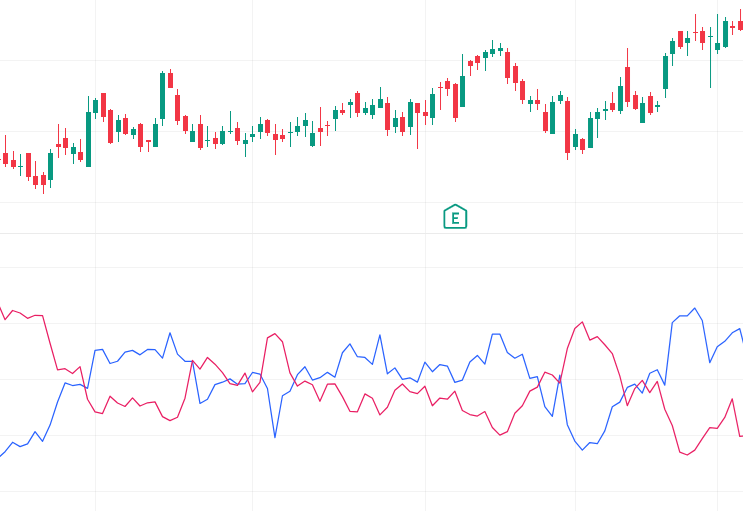
- Two Lines: VI+ (bullish line) and VI− (bearish line) plotted on the chart.
Interpretation:
- Crossovers between VI+ and VI− → Potential trend reversals.
- Wide separation between the lines → Strong directional momentum.
Distinctive Attributes
- Trend Recognition: Identifies bullish and bearish phases through line interactions.
- Momentum Strength: Measures the intensity of directional price movement.
- Noise Filtering: Focuses on meaningful forces rather than minor fluctuations.
- Cross‑Market Utility: Works across equities, forex, commodities, and indices.
- Visual Simplicity: Two clear lines make interpretation straightforward.
Market Psychology Reflected
- VI+ Above VI−: Buyers dominate, signaling bullish conviction.
- VI− Above VI+: Sellers take control, reflecting bearish sentiment.
- Lines Converging: Suggests consolidation or weakening momentum.
- Lines Diverging Strongly: Indicates powerful directional strength and trend continuation.
This dynamic mirrors the push‑and‑pull between bullish and bearish forces, offering traders insight into the sustainability of a move.
Analytical Considerations
- VI is trend‑sensitive, making it effective in trending markets but less reliable in sideways conditions.
- Traders often combine it with moving averages, RSI, MACD, or volume analysis to confirm signals.
- It is particularly useful for early detection of reversals, especially after consolidation phases.
- Strong separation between VI+ and VI− often validates momentum strength, reducing false signals.
Contextual Importance
- Trend Confirmation: Sustained VI+ dominance validates bullish strength, while sustained VI− dominance confirms bearish sentiment.
- Entry & Exit Guidance: Crossovers provide disciplined timing for trades.
- Risk Awareness: Helps avoid counter‑trend trades by aligning with dominant direction.
- Reversal Alerts: Early signals appear when VI+ and VI− cross after periods of consolidation.
Final Insight
The Vortex Indicator blends volatility and directional movement into a simple two‑line framework. Its ability to highlight trend shifts and measure momentum strength makes it a versatile tool for traders across all markets. While it should not be used in isolation, pairing VI with momentum or volume‑based indicators enhances accuracy and confidence. For those seeking a disciplined, trend‑focused approach to market analysis, the Vortex Indicator provides a reliable lens to navigate bullish and bearish conditions effectively.
