
The Running Moving Average (RMA) is a refined smoothing indicator widely applied in both algorithmic and discretionary trading systems. Its primary role is to filter out market noise while preserving the underlying trend direction more effectively than traditional moving averages. Unlike the Simple Moving Average (SMA), which assigns equal weight to all data points, RMA applies progressive averaging, creating a smoother curve that adapts better to volatile conditions.
Interpolation techniques further enhance RMA by reducing abrupt transitions, improving visual clarity, and making signals more consistent.
Structural Components
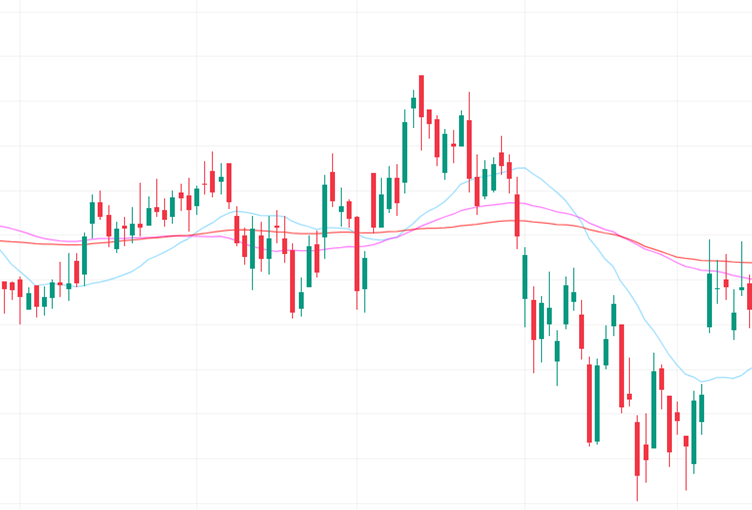
The RMA calculation is recursive, meaning each new value is derived from the previous smoothed value and the current price:

- RMA_t: Current RMA value.
- RMA_{t-1}: Previous RMA value.
- Price_t: Current price input.
- n: Period length (commonly 14).
- Interpolation Layer: Smooths transitions between data points for improved readability.
This recursive structure ensures that RMA reacts steadily to price changes without being overly sensitive to short‑term volatility.
Distinctive Attributes
- Superior Noise Reduction: Filters random fluctuations more effectively than SMA.
- Balanced Responsiveness: Reacts faster than long‑period SMAs but remains stable.
- Trend Recognition: Highlights sustained bullish or bearish direction.
- Foundation for Other Indicators: Serves as the backbone for tools like RSI.
- Reduced False Signals: Minimizes whipsaws in sideways markets.
- Cross‑Market Utility: Applicable across forex, stocks, commodities, and cryptocurrencies.
Market Psychology Reflected
- Steady Upward RMA: Suggests strong buying conviction and confidence in bullish sentiment.
- Declining RMA: Reflects selling pressure and bearish dominance.
- Flattening RMA: Indicates indecision or consolidation phases.
- Smooth Transitions: Prevent traders from overreacting to temporary volatility spikes.
This dynamic mirrors how traders perceive stability versus uncertainty, offering a clearer lens into crowd behavior.
Analytical Considerations
- RMA is trend‑sensitive, making it effective for identifying sustained direction.
- It is often paired with momentum oscillators (RSI, MACD) or volume indicators for confirmation.
- Particularly useful in automated trading systems, where clean signals are essential.
- Customizable parameters allow adaptation to different timeframes and asset classes.
Contextual Importance
- Momentum Confirmation: Validates whether price action supports bullish or bearish sentiment.
- Reversal Alerts: Detects weakening momentum before price shifts occur.
- Noise Filtering: Provides smoother signals that reduce false entries.
- Decision Support: Enhances confidence by offering clearer visualization of market direction.
Final Insight
The Running Moving Average (RMA) is a reliable smoothing tool that balances responsiveness with stability. By reducing noise while maintaining clarity, it helps traders interpret market direction more effectively. Its recursive structure and interpolation enhancements make it superior to traditional averages, offering cleaner signals and fewer false triggers. Whether used independently or as part of advanced indicators like RSI, RMA remains a cornerstone of modern technical analysis, providing traders with precision and confidence in volatile markets.
